
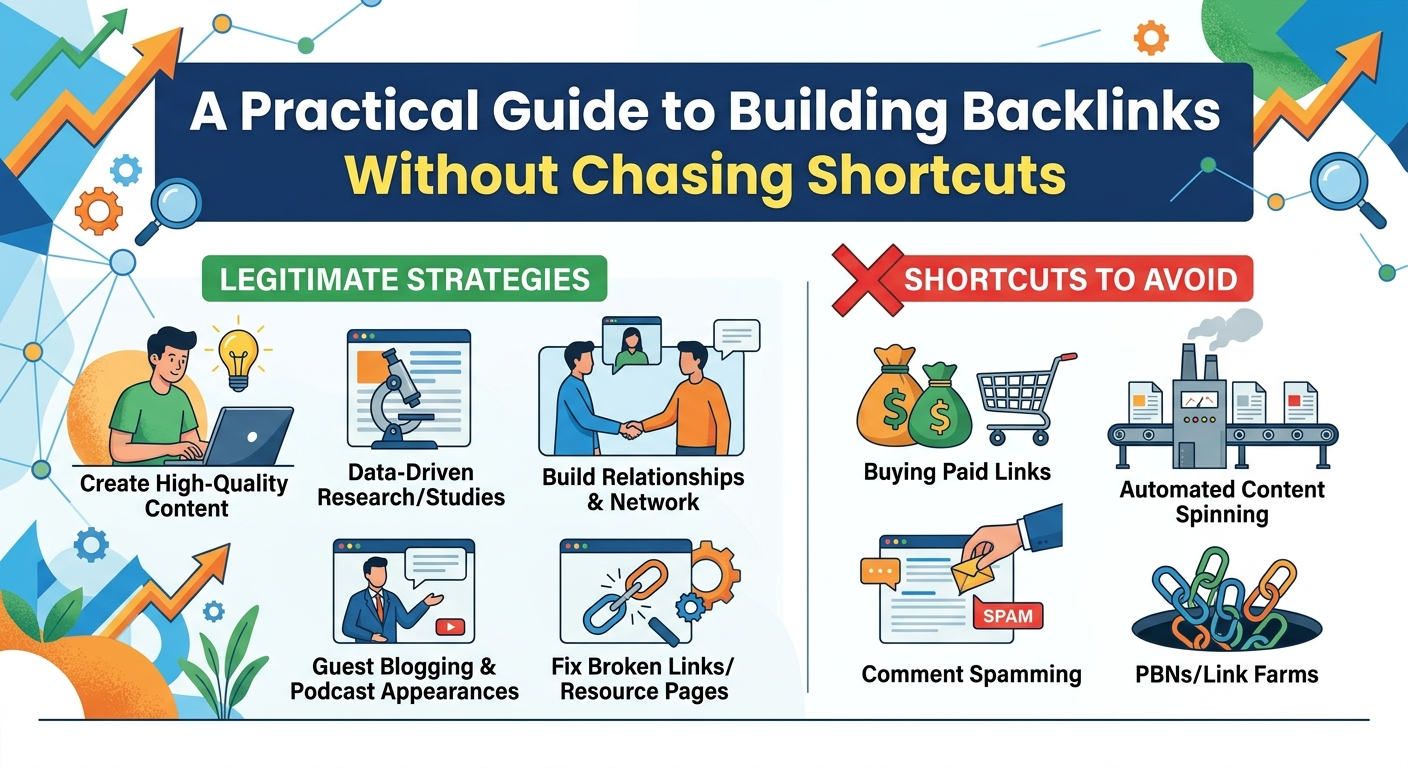
A Practical Guide to Building Backlinks Without Chasing Shortcuts

Backlinks are links from other websites to yours. They can help readers discover useful resources and give search engines clues about how pages relate to one another. But building them well takes more than collecting as many links as possible. Relevance, editorial judgment, and a useful page to point to matter far more than a raw tally.
For a small business, independent publisher, or new website, the process can seem mysterious. A sensible approach starts with understanding what makes a link worthwhile, then choosing a method that suits your goals and resources.
What Makes a Backlink Valuable?
A good backlink gives someone a reason to visit your site. It might cite original research, point to a practical guide, or offer readers a helpful next step. The strongest links tend to come from pages and websites that cover topics related to yours, and they appear in context rather than in a random list of unrelated links.
Before pursuing a link, consider a few questions:
- Is the site relevant? A link from a publication that serves a similar audience is usually more meaningful than one from a site with no connection to your subject.
- Would a reader click it? If the link adds context or helps answer a question, it is more likely to be useful to people as well as search engines.
- Does the page seem maintained? Look for clear authorship, current material, and a real editorial purpose rather than a page created mainly to host links.
- Is the placement transparent? Paid placements and other commercial relationships should be handled according to search engine policies and applicable disclosure rules.
One link cannot guarantee improved rankings, and no single metric can tell the whole story. Think of link quality as a combination of relevance, context, audience, and trustworthiness.
Four Ways to Earn or Build Links
1. Guest posting
Guest posting means contributing an original article to a publication that reaches an audience you understand. Start by studying the outlet’s existing coverage, then pitch a specific idea that adds something new. The article should be useful even if it contains no link to your site. If a link is appropriate, it should support a relevant point rather than interrupt the piece.
A generic pitch sent to hundreds of sites rarely makes a strong impression. A short, tailored note that explains the proposed topic and why it suits that publication is a better starting point.
2. Digital PR
Digital PR uses newsworthy information, expertise, or creative assets to earn attention from journalists and publishers. This might involve publishing a small survey, sharing a well-supported industry analysis, or offering a knowledgeable comment on a timely story. The key is having something genuinely useful to say. A press release that merely announces a routine update is unlikely to give editors a compelling reason to link.
Plan for the possibility that coverage will mention your brand without linking to it. That mention can still introduce your work to new readers, and it may be worth politely asking whether a link would help readers find the resource being discussed.
3. Niche edits
A niche edit is a request to add a link to an existing article. Because the content is already published, this method can look appealing, but it requires careful review. Check whether the article still receives attention, whether your resource fits naturally, and whether the site has a real editorial process. Avoid paying for a link that is inserted without a reader-focused reason or into a page unrelated to your subject.
4. Brand mention reclamation
Sometimes a writer refers to your business, product, or research without linking to it. Find the original mention, make sure it refers to your organization, and send a courteous note suggesting a link to the most relevant page. Keep the request brief and make clear how the link would help readers. There is no obligation for the publisher to add one.
For a closer look at these approaches and how to assess link quality, this backlink-building guide compares common methods and outlines mistakes to avoid.
Make the Destination Worth Linking To
Outreach works better when your website offers a page that deserves attention. Before contacting anyone, check that the proposed destination is accurate, easy to navigate, and specific enough to answer a reader’s question. Useful assets can include a clear how-to article, an original data summary, a glossary, or a well-organized resource page.
Review the page on a phone as well as a desktop. Make sure the main information is easy to find, sources are credited where appropriate, and claims are supported. If the page is outdated or thin, improve it before investing time in promotion.
Organize the Work Carefully
A basic campaign can be managed with a spreadsheet. Record each prospect, its topic, the relevant contact, the page you hope to promote, the date you reached out, and the outcome. This prevents duplicate messages and makes it easier to see which pitches are getting thoughtful replies. Keep follow-ups polite and limited; silence is not an invitation to send repeated reminders.
If you need help with research, writing, design, or outreach support, a freelance marketplace such as Osdire lets buyers find freelancers across categories including writing, marketing, and graphic design. Agree on the scope and deliverables before work begins, and review the finished work carefully. Freelancers can also use marketplaces to offer services, so clear expectations help both sides.
Common Mistakes to Avoid
- Choosing prospects solely because a tool reports a high authority score.
- Sending mass emails that ignore the publication’s subject and audience.
- Using identical, keyword-heavy anchor text in every placement.
- Buying links without checking the site, context, or applicable policies.
- Expecting immediate results or treating one campaign as a substitute for useful content.
Final Thoughts
Effective backlink building is a steady process of creating something worth citing, finding relevant people who may value it, and making a considerate case for its usefulness. Track progress, learn from the responses you receive, and prioritize links that make sense to actual readers. A smaller number of relevant, well-placed links is a better foundation than a long list gathered without regard for quality.